


Blog
Understanding the Different Types of Hyperpigmentation
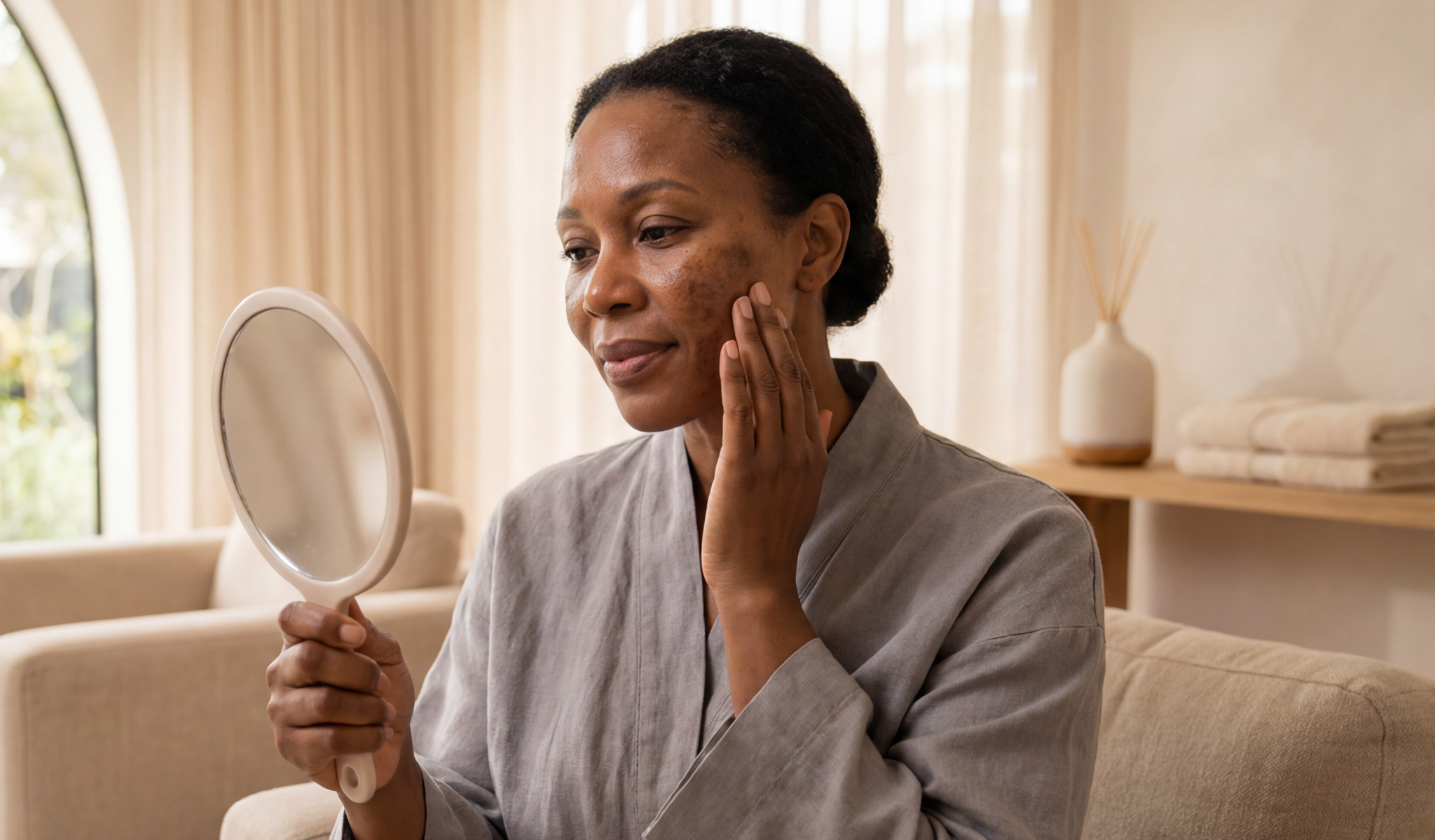
Have you ever noticed a dark spot on your skin and wondered where it came from? Not all discoloration is the same. Understanding the type you have is the most important step in choosing the right treatment.
Hyperpigmentation refers to any patch of skin that appears darker than the surrounding area. This happens when your skin produces excess melanin, usually in response to sun exposure, heat, hormones, or inflammation. While harmless, these spots can be stubborn and frustrating without the right tools.
What Causes Dark Spots?
Melanin protects your skin from UV damage. When your skin is triggered by the sun, hormones, or inflammation, it can produce too much melanin. This extra pigment clusters together and creates visible dark patches.
Depending on the trigger, the discoloration will look and behave differently.
True acne scars are textural
They change the surface of the skin, creating pits, depressions, or raised areas. These are structural issues caused by damage to collagen.
Common acne scars include:
- Ice pick
- Boxcar
- Rolling
- Hypertrophic or raised scars
These require collagen remodeling through laser resurfacing or microneedling.
Brown or red marks are not scars
They are pigment issues left behind after inflammation.
- Brown spots are called post inflammatory hyperpigmentation (PIH)
- Red or pink marks are called post inflammatory erythema (PIE)
- White spots are hypopigmentation, where pigment has been lost
These are not scars and respond extremely well to pigment-focused lasers.
The Three Main Types of Hyperpigmentation
Melasma
Melasma shows up as diffuse, symmetrical brown or grey brown patches, often on the cheeks, forehead, and upper lip. It is hormone driven and highly sun and heat reactive.
Sun Spots (Solar Lentigines)
Flat, clearly defined dark spots caused by years of UV exposure. These are common on the face, chest, and hands and worsen with sun exposure.
Post Inflammatory Hyperpigmentation (PIH)
Brown or dark spots left behind after your skin heals from inflammation. PIH commonly follows acne, irritation, or small injuries.
Pigmentation From Acne: What Counts as a Scar
Brown or red marks left after acne are often mistaken for acne scars, but they are actually pigmentation issues.
- Brown marks: post inflammatory hyperpigmentation
- Red or pink marks: post inflammatory erythema
- White marks: hypopigmentation
True acne scars refer to changes in texture. If the concern is discoloration instead of texture, lasers, resurfacing, and skincare can significantly improve it.
Why Identifying Your Type Matters
Each form of pigmentation responds best to specific technologies and products. Melasma requires gentle, controlled treatments. Deep dermal pigmentation responds well to Q Switch. Surface sun damage responds beautifully to CO2 or peels.
Choosing the right modality ensures faster, safer results.
How We Treat Hyperpigmentation at Our Med Spa
We use advanced devices to target pigment at every level, from deep dermal discoloration to superficial sun spots.
1. Q Switch Laser for Deep Pigmentation
Our Quanta Q Plus EVO C targets stubborn, deep rooted pigmentation such as melasma, dermal PIH, and dense brown patches. It breaks pigment into tiny particles that the body naturally clears.
2. Motus AZ+ Moveo PL (755 nm) for Brown Spots
Moveo Pigmented Lesions delivers even, low energy to safely break up epidermal pigmentation and sun damage. This is ideal for brightening overall tone and treating sun induced discoloration.
3. Hollywood Carbon Facial for Brightening and Acne Related PIH
A Hollywood Carbon Facial mask paired with a laser lifts oil, exfoliates the skin, targets PIH, refines texture, and brightens tone with zero downtime.
4. CO2 Resurfacing for Surface Damage and Sun Spots
We offer CoolPeel, DekaPulse, and Helix CO2 options to remove years of UV damage and lift superficial pigmentation.
- Perfect for sun spots and rough, uneven texture
- Lightens or removes surface pigmentation
- Downtime varies from 3 to 7 days
5. Chemical Peels
Professional chemical peels gently lift pigment from the surface and boost cell turnover. They are ideal for mild to moderate pigmentation and pair well with laser plans.
6. Microneedling
Microneedling improves PIH and uneven tone by stimulating collagen and dispersing pigment. It can be combined with brightening actives for enhanced results.
How Correct Skincare Products Support Your Results
Using the right medical grade products is essential for preventing new pigment, fading existing discoloration, and maintaining results after treatments. We carry Vivier, a high quality medical grade skincare line known for its effective brightening and pigment correcting formulas.
Here is how each ingredient helps:
Vitamin C
- Brightens overall skin tone
- Fades dark spots and protects against future sun damage
- Antioxidant support for smoother, healthier skin
Vivier’s vitamin C serums are known for exceptional stability and deep penetration.
Retinol
- Speeds up cell turnover to fade pigmentation
- Improves texture, fine lines, and dullness
- Helps prevent clogged pores that lead to post inflammatory hyperpigmentation
AHA and BHA Exfoliants
- AHA (like glycolic or lactic acid): smooths the surface and removes dead skin that holds pigment
- BHA (salicylic acid): targets deeper congestion and acne related PIH
Niacinamide
- Reduces redness and inflammation
- Helps prevent new pigmentation by strengthening the skin barrier
- Great for melasma and reactive skin types
Hydroquinone
- A strong pigment inhibitor
- Used in short, controlled cycles to treat stubborn discoloration
- Often combined with other treatments for melasma or deep brown spots
Exfoliating Scrubs
- Brighten dull skin by removing surface buildup
- Help other pigment correcting products absorb better
- Best used sparingly to avoid irritation
Pairing these products with lasers, peels, or microneedling gives faster and longer lasting results.
The Golden Rule: Sunscreen Is Required
No pigmentation plan works without daily SPF. UV exposure is the primary cause and trigger for all forms of hyperpigmentation.
Apply a broad spectrum SPF 30 or higher every morning, use enough product, reapply outdoors, and protect with hats and sunglasses.
Your Path to Clearer, Brighter Skin
Whether you are dealing with melasma, sun spots, or post acne pigmentation, we have advanced solutions that target every layer of discoloration. Combined with medical grade skincare like Vivier, you can achieve faster, safer, and more stable results.
If you are unsure what type of pigmentation you have, we are here to assess your skin and create a custom plan.
Book a Consultation
Every transformation begins with understanding.
Discover your best skin through a bespoke consultation.
Book Consultation | In Person · Virtual · Phone